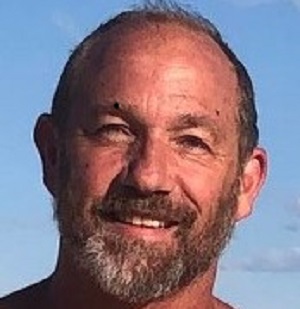
Craig Raymond
Indigenous Health Scholarship
University of New England, NSW
Masters of Clinical Psychology
Scholarship Awarded 2024
Sponsored by:
Rotary Club of Orange
Student Profile
I am a Proud Wiradjuri Man descendant from my mother’s maternal line from the Forbes area of NSW. I currently live on Gadigal Country and continue connections with mob, for example, being an assisted coach to the Waterloo U13 Rugby League side that played in the 2023 Koori Knock and my son is a proud member of the Waverley College Walawaani Indigenous cultural group and player in the Koori Knock-out.
No member of my family has ever been to university so stepping into this field being nearly 50-years-of-age was very daunting. During my psychology studies in 2023 I was fortunate to be able to return to ancestorial Country, spending a week in Condobolin and meeting with many of my mob whilst discussing what services could help their community. Mental health services are very much in demand, as is research into issues impacting upon this community and many Indigenous communities, such as disproportionate Indigenous incarceration levels.
My thesis and literature review both explored this area and it an area I have a passion for. Personally, I love being a dad, enjoy my sports, especially rugby league, and am a volunteer in both rugby league and surf lifesaving.
How will I contribute to improving Indigenous health as a qualified medical practitioner or health worker?
Of all qualified psychologists those with an Indigenous identity comprise less than 1% and this percentage is even less with Clinical or PhD qualified psychologists. Research has showed that many therapies based on western research and delivered without cultural awareness have been ineffective in the treatment of Indigenous mental illness or the prevention of the same.
My goal either as a clinical psychologist (post 2025) or through further research/teaching/clinical work as a PhD qualified practitioner (post 2027) is to further the inclusion of culturally appropriate therapies to help address the disproportionate levels of mental illness within Indigenous communities. In addition, to be an advocate for social change in law reform and Indigenous incarceration.
When Indigenous people are assisted to become leaders in specific fields they become role models for others. Learned helplessness is a chronic barrier for many Indigenous people but having role models helps our mob break through this barrier and embrace the strengths that they, are their ancestors, have possessed throughout generations.
It is my hope that I can play a small part in increasing the percentage of Indigenous psychologists, increase the effectiveness of therapies delivered to Indigenous peoples, and to address the disproportionate incarceration levels that have been enduring since colonisation of Indigenous peoples.
Current Progressive Report
Trimester 1, 2025 was another period away from home where I resided in Armidale in connection with my studies and placement. Whilst difficult, it was very pleasing to achieve two ‘high distinctions’ and complete my placement requirements.
Trimester 2 units have begun and during August I’ll likely move back down to Sydney to finish my final placement requirements (at Long Bay Goal), and come October, finish my course requirements for the Masters of Clinical Psychology – a six-year fulltime study journey.
I am very appreciative of the support this scholarship has provided and the inspirational stories Rotary shares that I know keeps me motivated, and I am sure many others as well. As I will soon achieve full registration as a psychologist (and then commence a two-year clinical internship program) I hope to put the study and placement experience I have gained to use to help the general, and Indigenous, communities in the area of mental health.
The area of psychology is one with a very low Indigenous practitioner percentage. Whilst Indigenous people make up nearly 4% of the general population, we make up only 1% of registered psychologists. Additionally, it is supported in research that Indigenous communities face barriers to mental health care, both in accessibility, diagnosis, and treatment, and it is hoped that with the wonderful support of scholarships, that this percentage will increase, and in turn, this will assist in bridging the gap for Indigenous mental health outcomes.