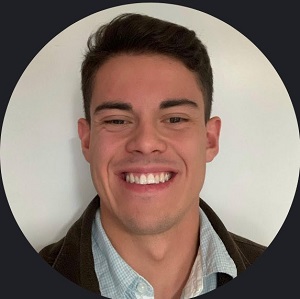
Jackson Corona
Indigenous Health Scholarship
University of Tasmania, Tas
Doctor of Medicine
Scholarship Awarded 2023
Sponsored by:
Dr King Gan
How will I contribute to improving Indigenous health as a qualified medical practitioner or health worker?
As a qualified medical practitioner and eventually an ophthalmologist, I will be committed to improving Indigenous health and addressing the significant health disparities that exist within Indigenous communities. One of the ways that I plan to contribute to this goal is by becoming an ophthalmologist and using my skills to address the high rates of eye disease that are prevalent in Indigenous populations.
I am particularly interested in researching genetic eye diseases, which disproportionately affect Indigenous communities. By gaining a deeper understanding of the genetic and environmental factors that contribute to these diseases, I hope to be able to treat and help prevent disease.
More specifically, I plan to take my skills to Aboriginal communities in Alice Springs, where I will work closely with Indigenous health workers and community leaders to provide culturally sensitive and appropriate care to Indigenous patients. I am from Alice Springs and it is a place close to my heart I have seen with my own two eyes the health disparity in rural Aboriginal communities. Even though my family ties are from far north Queensland and Thursday Island, the Aboriginal communities I grew up around were in Alice Springs. That is why I want to return one day with ophthalmic skills and gene therapy knowledge to help reduce the disparity of healthcare between those communities and the rest of Australia.
Furthermore, growing up I would watch Fred Hollows foundation ads on tv and would think how amazing it was that he could give sight back to people. Hollows worked tirelessly to improve the eye health of Indigenous Australians and I wish to follow his footsteps.
Overall, my goal as a qualified medical practitioner or health worker will be to use my skills and knowledge to improve the health of Indigenous people, particularly in the area of eye health mainly in Alice Springs. By working closely with Indigenous communities and focusing on culturally appropriate and sensitive care, I believe that I can make a meaningful difference in the lives of many, and in the same stroke, fulfil my career goal.
Current Progress Report
I am grateful for the chance to take a while and reflect on the last six months of my fourth year of medical school. I am currently studying at the University of Tasmania at the Hobart campus. I am in my second last year of study and it is my first year of full placement. These placements consist of 6 week blocks focusing on different medical and surgical specialties. I began this year carrying the same special interest and aspiration of ophthalmology. The first half of this year has been formative and even given me new interests and potential pathways in medicine. I thoroughly enjoyed the change of pace that full time placement has given. There were high highs and definitely low lows.
My first placement block was in paediatrics. I started the placement very cautious that it could affect me negatively. … I really wish I started on another specialty so that I had time to build up some resilience but I was self-aware and tried my best to practice separating myself from the situation. The biggest thing I learned from that rotation was that I will not be a paediatrician.
My second placement was in Obstetrics and Gynecology. It was quite tentative entering this placement, as I know that losing babies is hard, miscarriage is hard, women’s cancers are hard, but I have also experienced the joy of childbirth so the excitement outweighed the nervous feelings. I was right. The experience overall in O and G was great. I was present for 3 births, 2 of them I was able to scrub into the caesarian section and even cut the umbilical cord. I also attended other gynecology related surgeries which I enjoyed. I particularly like specialties with both surgical and medical elements to it.
The last rotation I had before the end of the semester was medical specialties. This consists of 2 week blocks in different subspecialties. My allocations were medical oncology, rheumatology and neuro/stroke. Medical oncology sparked an interest in me I didn’t know was there. I really enjoyed oncology. So much so, that it made me interested enough to talk with the head of radiation oncology about career options. It is now the front runner for what I want to do as a career. I love the patients I get to talk to, the problems that can be fixed and the promising future with technology. It was truly a potentially life-altering rotation. Rheumatology was interesting but not amazing, and neuro/stroke was a really good learning rotation. It was good to see obscure or hard to imagine pathologies in real patients in real time. Overall this rotation was important and very good to me.
This was the first year of medicine that I did not have end of semester 1 exams. It was such a nice change. I was able to take 2 weeks and spend time with my family and relieve stress. I had some assignments due before. The end of the semester that all went well with no hiccups. I felt like the semester was very challenging towards the beginning but overall I was stretched in a good way and came out with more skills around self-preservation as well as a new found love for oncology. It is a nice springboard for the psychiatry and surgical rotations that are to follow in semester 2.
Thank you for your ongoing support and interest in me. The scholarship means I get to become a doctor and eventually impact the lives of people for good. It is all I ever hoped for.