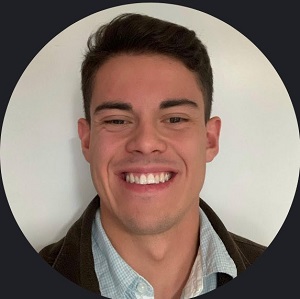
Jackson Corona
Indigenous Health Scholarship
University of Tasmania, Tas
Doctor of Medicine
Scholarship Awarded 2023
Sponsored by:
Dr King Gan
How will I contribute to improving Indigenous health as a qualified medical practitioner or health worker?
As a qualified medical practitioner and eventually an ophthalmologist, I will be committed to improving Indigenous health and addressing the significant health disparities that exist within Indigenous communities. One of the ways that I plan to contribute to this goal is by becoming an ophthalmologist and using my skills to address the high rates of eye disease that are prevalent in Indigenous populations.
I am particularly interested in researching genetic eye diseases, which disproportionately affect Indigenous communities. By gaining a deeper understanding of the genetic and environmental factors that contribute to these diseases, I hope to be able to treat and help prevent disease.
More specifically, I plan to take my skills to Aboriginal communities in Alice Springs, where I will work closely with Indigenous health workers and community leaders to provide culturally sensitive and appropriate care to Indigenous patients. I am from Alice Springs and it is a place close to my heart I have seen with my own two eyes the health disparity in rural Aboriginal communities. Even though my family ties are from far north Queensland and Thursday Island, the Aboriginal communities I grew up around were in Alice Springs. That is why I want to return one day with ophthalmic skills and gene therapy knowledge to help reduce the disparity of healthcare between those communities and the rest of Australia.
Furthermore, growing up I would watch Fred Hollows foundation ads on tv and would think how amazing it was that he could give sight back to people. Hollows worked tirelessly to improve the eye health of Indigenous Australians and I wish to follow his footsteps.
Overall, my goal as a qualified medical practitioner or health worker will be to use my skills and knowledge to improve the health of Indigenous people, particularly in the area of eye health mainly in Alice Springs. By working closely with Indigenous communities and focusing on culturally appropriate and sensitive care, I believe that I can make a meaningful difference in the lives of many, and in the same stroke, fulfil my career goal.
Current Progress Report
The beginning of my final year.
As I began my final year as a medical student, I was filled with a variety of emotions. On one hand I was excited to only have one year left, excited to complete this massive goal I set out to achieve, excited to find out where I would be working as an intern and excited to be finished with all of my “book” exams. On the other hand, I was very nervous. I was nervous about only having a year between me and the responsibilities of a doctor, nervous to get a good offer for internship, nervous that I didn’t know enough, and nervous to be finishing up in what had become my comfort zone. Med school.
The year began on the general surgical rotation. I was assigned to the breast and endocrine surgical team. I was very excited about this, as I have a particular interest in cancer, and this team dealt with breast cancers on a daily basis. The team was lovely, the days were long and the learning was enjoyable. By the end of this rotation I could say that I was confident in stepping into a general surgery ward as an intern next year. It felt attainable.
The next rotation was my selective period/geriatrics. This was a very exciting rotation as I had 3 weeks of my own choice for rotations. I was able to organise a week-long rotation at the Peter MacCallum Cancer centre in Melbourne. I was to spend a week with a Registrar I worked with in Tasmania on the head and neck radiation oncology team. This was a great week of seeing what a big centre can do. There was a greater diversity of cancers, more advanced machines and very experienced Radiation oncologists to learn from. The next 2 weeks of my selection I spent with the Neurosurgery team. I had been advised to spend time with them and see the surgical side of brain cancers. I immediately gelled with the team and had opportunities to scrub into complex cases, and really develop my surgical skills. The days were long and fulfilling. I gained a great appreciation for their skill and the high-risk work they do. I learned and grew a lot from this. Out of this rotation, I was able to receive a reference from one of the surgeons for my internship application. The final 2 weeks of this block were spent on the repatriation centre with the geriatrics team. To be honest, this was not my cup of tea, and I didn’t enjoy this very much.
The next rotation was my anaesthetics/ICU/Private practice block. Anaesthetics surprised me with how enjoyable the work was. The physiology was impressive and fun to study, it was hands-on, and I was back in theatres which I loved. This rotation had great teaching. I then spent 2 weeks in the ICU. The medicine was complex and lots of it went over my head. The main learning I took away was what is necessary for an ICU patient to meet in order to be “ward safe”. The final week of this rotation was spent at ICON, the private cancer centre in Hobart. I was able to dive into what I am interested in and see how things work on the private side.
Just after semester break I received my match for internship. I thought I would mention it here. I will be interning in Melbourne at the Alfred. It was high on my list and I am thrilled to be working there next year.