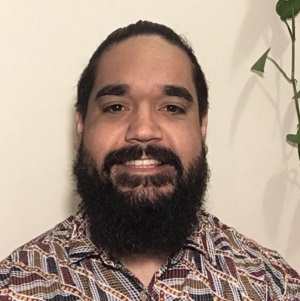
Jesse Aldridge
Indigenous Health Scholarship 2023
Flinders University, SA
Bachelor of Vision Science/Master Clinical Optometry
Scholarship Awarded 2023
Sponsored by:
Rotary Club of Botany Randwick
How will I contribute to improving Indigenous health as a qualified medical practitioner or health worker?
I am a proud Indigenous Wandiwondian Yuin man of the South Coast of NSW that has been blessed with the opportunity to grow up on my country and form strong connections to my community. I have a solid support network within my family and my community, and this allowed me to develop a strong sense of self and comfort in my identity, and it also gave me a solid sense of responsibility towards my people. While I come from a community with a high Indigenous population, I was the only Indigenous male in my year to finish their HSC. My family always supported my endeavour into further education, and with their support I was able to live out this dream completing my first degree, a Bachelor of Public Health (Health Promotion) at the University of Wollongong in 2020.
I chose to study in the health area because far too many of our people are dying early from preventable disease. I have made the choice to break this cycle and do everything in my power to help our mob break their generational traumas.
While my journey to my first degree showed me the importance of developing and implementing prevention strategies to address the inequitable health outcomes our mob face, I struggled working isolated in an office and not face to face with our mob. I believe this is my strongest quality, I draw my inspiration and determination from my people, and I believe I would be better suited in clinical treatment.
The decision to study Optometry came after I had troubles with my own vision. At the time I was scared and genuinely thought that I was going to lose vision in one of my eyes. The optometrist was very dismissive and treated me as though I was silly. It left me furious and the thought of our Elders experiencing this, was painful. I know I can provide better care for mob than what was offered to me in my time of uncertainty and I felt as though I had a duty to obtain this qualification and serve my mob.
My vision is that in 5 years’ time I will be a qualified optometrist that will be able to treat mob in a culturally safe way. My 10-year plan is to give back to my community by helping establish/promote pathways for mob thinking about a career in health. Then when I have established myself, I want to open my own Allied health clinic, along with other Indigenous Allied Health professionals, to deliver a range of culturally appropriate health services.
Current Progress Report
My first semester of 2025 at Flinders University was both challenging and rewarding as I balanced study commitments with family life, continuing to grow into my role as a father while pursuing my goal of becoming an optometrist. I completed four topics this semester: HLTH2101 – Critical Social Analysis of Health, MMED2931 – Human Physiology, HLTH2107 – Research and Study Skills 2, and OPTO2004 – Visual Optics.
Critical Social Analysis of Health explored the ways inequity, privilege, and power shape health outcomes in Australia. The topic helped me develop a deeper understanding of how social structures influence health and how culturally safe, person-centred communication can improve healthcare experiences. I particularly enjoyed applying sociological theories to real-world health statistics and reflecting on how these perspectives can be integrated into my future practice. This subject challenged me to think more critically about the role of healthcare professionals in addressing systemic inequities.
Human Physiology expanded my understanding of the structure and function of the body’s organ systems. The practical classes were a highlight, giving me the chance to perform laboratory techniques, collect physiological data, and interpret it in a scientific context. Working in teams to complete experiments improved my collaboration skills, while analysing the results strengthened my ability to link theoretical concepts to real-life biological processes. This knowledge will be essential as I progress to more advanced vision science and clinical training.
Research and Study Skills 2 developed my ability to engage with health research in both qualitative and quantitative forms. We explored ethical considerations in research, the practical application of methodologies, and how to use software for data analysis. I found the reflection on professional development particularly useful in helping me articulate my own value and skills, which will be important for my future career.
Visual Optics was my hardest subject this semester and the one I focused on most throughout the session. It laid the foundations of what it means to be an optometrist, bridging the gap between vision science theory and its clinical application to produce real outcomes for patients. We examined the optical system of the eye, retinal image quality, and the optics of spectacles, contact lenses, and ophthalmic instruments. While challenging, learning this content gave me a deeper appreciation for the precision and complexity involved in optometric practice, and it has motivated me to continue strengthening my skills in this area.
Looking ahead, I am eager to continue building on this knowledge in Semester 2, with a focus on deepening my understanding of both the science and social context of eye health.