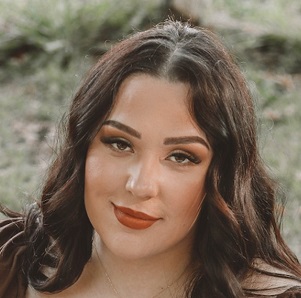
Laura Cauchi
Indigenous Health Scholarship
Western Sydney University, NSW
Doctor of Medicine
Scholarship Awarded 2024
Sponsored by:
Paul and Julia Reid and
Rotary Club of Pambula
Student Profile
My name is Laura Cauchi, and I am a proud mother to three young boys, a Registered Nurse and dedicated Medical student who has a passion for helping others. Growing up I was blessed enough to be raised in Western Sydney where I was emersed in both the Aboriginal and Maori culture which has given me an ongoing appreciation and respect to the connection family has in the provision of holistic healthcare.
How will I contribute to improving Indigenous health as a qualified medical practitioner or health worker?
As a Doctor my goal is to relocate to a rural or remote location where I can provide healthcare to communities which need stable and safe healthcare which embodies principles such as cultural safety, kinship, and connection to land. Furthermore, I wish to pursue training as a rural generalist with a special interest in obstetrics and gynaecology services. In addition to this, I would also like to provide culturally safe end of life care to mob which embodies the traditional beliefs and customary practices to take place in a setting which is comfortable and appropriate for the family and individual involved.
I guess you can say my goals are quite diverse, but to close the gap I believe they need to be diverse to ensure nobody is left behind.
Current Progressive Report
The first six months of my clinical years have been some of the most challenging, rewarding, and transformative months of my medical journey. Coming into third year as a registered nurse, I thought I had a reasonable understanding of healthcare. However, I quickly realised that medicine requires a completely different way of thinking. Rather than focusing solely on implementing management plans, I have had to learn to develop differential diagnoses, understand the reasoning behind investigations and treatments, and become comfortable with uncertainty.
Throughout my rotations, I have had the privilege of meeting patients who have trusted me with their stories during some of the most difficult times in their lives. Whether caring for patients undergoing chemotherapy, attending multidisciplinary team meetings, or spending time in general practice and the community, I have learned that medicine is just as much about listening and compassion as it is about scientific knowledge. Some patients have left a lasting impression on me, reminding me that every diagnosis represents a person with fears, hopes, and a family depending on them.
There have also been moments where I have questioned whether I was good enough. Walking into new hospitals every few weeks, trying to learn new systems, meeting new supervisors, and constantly being assessed has at times felt overwhelming. Imposter syndrome has been something I have had to work through regularly. I have learned that asking questions is not a sign of weakness but an essential part of becoming a safe doctor. Every clinician I admire today was once a medical student learning the same skills.
Outside of university, life has continued to be just as demanding. There have been early mornings, late nights, assignments completed after everyone else had gone to bed, and many moments where I wondered how I would fit everything in. Like many students, life has not paused simply because I started clinical training. Family responsibilities, appointments, unexpected challenges, and trying to be present for those I love have all continued alongside the demands of medicine. These experiences have taught me resilience, organisation, and perspective.
One of the highlights of this year has been becoming involved in research and quality improvement projects. Contributing to projects that have the potential to improve patient care has shown me another side of medicine that I genuinely enjoy. It has reinforced that learning extends well beyond the bedside and that we all have a responsibility to continually improve the systems we work within.
The clinical years have also helped shape my future career aspirations. Spending time in operating theatres, oncology, and anaesthetics has confirmed my passion for acute care and procedural medicine. Watching multidisciplinary teams work together has demonstrated the importance of collaboration and reminded me that excellent patient care is never delivered by one individual alone.
Looking back, I have grown far beyond simply gaining medical knowledge. I have become more confident communicating with patients, presenting clinical cases, interpreting investigations, and thinking through management plans. More importantly, I have developed greater empathy for patients navigating illness and uncertainty, while also learning to extend some of that compassion towards myself during difficult periods.
As I move into the second half of the year, I know there is still an enormous amount to learn. I will undoubtedly continue to make mistakes, ask countless questions, and experience moments of self-doubt. However, these first six months have shown me that growth comes from embracing challenges rather than avoiding them. Although the journey has not always been easy, I feel incredibly grateful for the opportunity to learn from inspiring clinicians, remarkable patients, and every experience along the way. These first six months have strengthened my confidence that I am exactly where I am meant to be, and I am excited to continue growing into the doctor I hope to become.