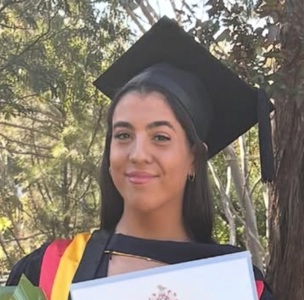
Maya Benvenga
Indigenous Health Scholarship
Monash University, VIC
Bachelor of Biomedical Science and
Doctor of Medicine
Scholarship Awarded 2026
Sponsored by:
Rotary Club of Rosebud-Rye
Student Profile
My name is Maya Benvenga and I’m a proud Gubbi Gubbi women. I’m currently in my first year of a Bachelor of Biomedical Sciences and Doctor of Medicine at Monash University, Churchill Campus. My interests in medicine lie in infectious diseases and Indigenous health. During my undergraduate degree (Bachelor of Biomedicine), I have greatly enjoyed engaging in extracurricular activities. I completed a placement in the microbiology diagnostic laboratory at St Vincent’s, as well as an internship at the Walter and Eliza Hall Institute of Medical Research, where I worked within an infectious diseases laboratory. I also undertook experiences in South Australia with both the Indigenous health team and the molecular team at Flinders Medical Centre. Most recently, I completed an extracurricular placement with the microbiology diagnostic laboratory at Eastern Health.
Outside of medicine, I enjoy maintaining an active lifestyle. I am particularly passionate about long distance running and have completed 13 half marathons to date, with my first full marathon coming up in October, the Melbourne Marathon. I am a social person and enjoy spending my weekends with friends as a way to relax and unwind. This often involves going for runs with friends, catching up over coffee or dinner, and driving around Melbourne blasting tunes.
How will I contribute to improving Indigenous health as a qualified medical practitioner or health worker?
From a young age, I was taught about the challenges and inequalities my Indigenous family has faced. My mother and her twelve siblings grew up in Sarina, a rural town in the Mackay region of Queensland. My grandmother was part of the Stolen Generations and was placed in the Cherbourg Mission as a child. As a result of the trauma, she left behind her twelve children, the youngest of whom was seven years old—my mother. Access to essential services, particularly healthcare and mental health support, was limited.
As I grew older and learned more about my people’s history and the disparities in healthcare access, I realised I had a responsibility to help address these issues. Pursuing a career in medicine will allow me to serve my community, particularly Indigenous populations, while combining my passion for science and healthcare. In addition to wanting to improve access to healthcare for Indigenous people, something I find very important is changing perceptions and breaking stereotypes. Pursuing a career in medicine can be a powerful way to challenge the often limiting and negative stereotypes associated with Indigenous communities.
By becoming a doctor, I can show that Indigenous people are not only capable of excelling in diverse fields but also bring unique perspectives and strengths to the healthcare system. It’s an opportunity to redefine what it means to be Indigenous in a modern context and to inspire others in my community to pursue their own dreams, no matter how ambitious.