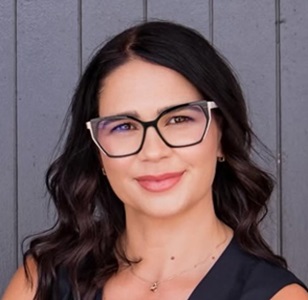
Shannon Peckham
Indigenous Health Scholarship
University of Melbourne, Vic.
Masters Clinical Audiology
Scholarship Awarded 2025
Sponsored by:
Rotary Club of Mt Morgan
Student Profile
I am a Tubba-gah woman, who are the traditional owners of the land surrounds of the area now known as Dubbo, NSW. I was born and raised on the land of the Muluridji people and currently live and practice on the lands of Bindal people.
I am a qualified optometrist and work in private practice in Ayr while running after my children. Upon graduating from University of Melbourne in 2004, completing a Bachelor of Optometry I was recognised at the first female first nations optometrist of Australia. Over my 20year career as an optometrist I have provided eyecare to remote locations and communities in every state of Australia.
I have been fortunate enough to engage with communities such as Domadgee, Mornington Island and Palm Island. I am a member of Indigenous Allied Health Australia and a board member of the Optometry Council of Australia and New Zealand.
How will I contribute to improving Indigenous health as a qualified medical practitioner or health worker?
I would be Australia’s only First Nations Optometrist/Audiologist, which allows a unique perspective into allied health across both disciplines. Currently First Nations allied health providers in Australia make up 0.2% of the optometry workforce and there are fewer than 6 audiologists. For First Nations people, systemic barriers to accessing vision and hearing health services can make it more difficult to navigate an already complex health system.
Access may be affected by limited availability and accessibility of culturally appropriate health services, a lack of continuity of care, or racism or discrimination from health care providers. I would like to help to improve health outcomes for First Nation people across both eye and ear health services and contribute to access and provision of culturally safe services. My experience as an optometrist, my current training in audiology and involvement in various health service organisations means I well positioned to effect change within the First Nations allied health space.
I also hope that other First Nations people will consider a career in allied health and I am happy to lead the way forward.
Current Progressive Report
Over the past six months, my journey through the Master of Clinical Audiology has felt less like a series of subjects and more like a story that is steadily unfolding. I am studying remotely through the University of Melbourne while living in Ayr in Far North Queensland, in a small and remote community of around 10,000 people. From here, I work full time as an optometrist in my own practice, care for my two primary-school-aged children, and study full time. The days are long and full.
Studying from a distance requires constant adaptation. While lectures and tutorials take place online, the most meaningful learning happens during practical intensives, placements, and exams — all of which require travel. I regularly travel over 100kms to attend clinical placements in Townsville.
The last six months have been particularly demanding. Balancing full-time optometry work, full-time study, and family life required persistence and careful prioritisation. There were moments when the workload felt heavy and the pressure quietly accumulated. At the same time, there were moments of real affirmation — when complex concepts finally made sense, when theory aligned with clinical experience, and when learning felt directly relevant to the needs I see every day in practice.
Completing the first year of the degree was a significant milestone for me. I finished the year with an overall average of High Distinctions, which came as both a relief and a surprise. Exam periods were emotionally charged — a mix of nerves, focus, and gratitude. Having additional study time allowed me to prepare thoroughly, and when results were released, I felt deep appreciation for the opportunity to study at this level and for the support that made it possible.
Outside of formal study, my connection to community remains central. Living in a remote town means that healthcare is deeply personal. Practitioners are known, trusted, and often the only local point of care. This reality strongly shapes why I am undertaking this degree. With one year of study remaining, I can clearly see the pathway ahead. On completion, I will be amongst a small number of dual-qualified optometrists and audiologists in the country, and the only Indigenous person to hold both qualifications. This carries great responsibility and meaning for me. It represents not only professional growth, but the opportunity to strengthen culturally safe, accessible hearing and vision care for regional and remote communities.
I am deeply grateful for the financial support that has been provided to me. The contribution I have received has gone largely toward covering the unavoidable travel costs associated with placements, practicals, and exams. This support has eased a significant burden and has allowed me to focus more fully on learning and growth. I truly appreciate Rotary’s generosity and belief in my journey. Knowing that others are willing to invest in my education has been both encouraging and motivating during a demanding and transformative period of my studies.
This degree is not just an academic pursuit. It is a commitment to service, representation, and long-term impact — ensuring that advanced skills, understanding, and care remain within the communities that need them most.