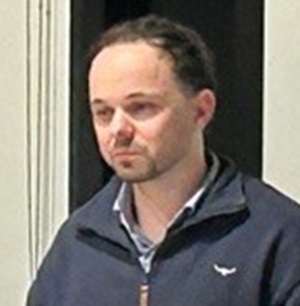
Steven Cable
Indigenous Health Scholarship
University of Sydney, NSW
Doctor of Medicine
Scholarship Awarded 2024
Sponsored by:
Stephen & Judith Humphreys
Student Profile
My name is Steven Cable and I am a proud Noongar Man with connection to Narrogin in Western Australia. Growing up I always envisioned myself working in healthcare to connect to local communities and be able to make a difference to as many lives as possible. I started my healthcare journey as a Physiotherapist working at Royal Prince Alfred Hospital in New South Wales for four years and was able to meet some amazing people. After this I decided to begin the process of starting a career in Medicine. I am currently in my second year studying at the University of Sydney and looking forward to working in regional and rural settings when I am qualified.
How will I contribute to improving Indigenous health as a qualified medical practitioner or health worker?
Through my experiences at University Placements as a Physiotherapist in more regional and rural settings (Broome, Dubbo and Orange) I have witnessed the struggles and frustrations felt by many about the lack of specialised services available and the complicated process of needing to travel to an area with greater medical service exposure.
My goal through my current medical program is to be able to gain the required knowledge and training to become a Qualified Physician in a specialty which is going to eventually benefit small Indigenous communities the most. I am still currently weighing up between a few specialties, including Ophthalmology, but am still quite early in my training and will be able to make a more distinct choice in the coming years. Once gaining a more specialised position I am aiming to help increase exposure in rural and remote communities. One of the main ways I can do this is by encouraging as many fellow health professionals as possible to work in these settings so we can help address at least part of the access to healthcare struggles a lot of Indigenous communities are facing.
Current Progressive Report
The first half of 2026 marked the beginning of my final year of the medical program and brought with it an exciting mix of new clinical settings and continued growth. The semester began with my elective placement in Geriatrics at Royal North Shore Hospital, which I then had the opportunity to contrast with a placement at an Aboriginal Medical Service in West Arnhem Land, Northern Territory. This experience offered a major comparison between metropolitan and remote healthcare delivery. Working in Jabiru gave me genuine insight into the realities of delivering medicine in remote Australia, including navigating flooded roads during the wet season and, at times, needing to access outlying communities by small plane. This placement significantly broadened my appreciation for the challenges of healthcare access and delivery in remote communities, and reinforced my growing interest in rural and remote health.
Following this, I commenced a surgical rotation, which involved early morning starts and long days in theatre. Despite the demanding hours, this block was highly enjoyable and provided excellent exposure to a wide variety of surgical specialties, including Upper GI, Neurosurgery, and Ear, Nose and Throat (ENT). Being able to observe and assist across a range of surgical disciplines further developed my clinical (anatomy) and procedural skills (cannulas, suturing) as I was able to be more hands on than previous years. The intensity of the block was challenging, but it was ultimately one of the more rewarding placements of the semester, both in terms of clinical learning and personal satisfaction.
My next placement was in General Practice, which I completed across two very different settings, Batemans Bay and Leichhardt. This again provided a valuable
contrast between rural and metropolitan general practice, highlighting the differing patient demographics, resource availability, and models of care between the two settings. Experiencing GP in both a coastal rural town and an inner-city metropolitan clinic reinforced how adaptable the role of a general practitioner needs to be, and gave me a well-rounded understanding of the breadth of presentations and continuity of care involved in community-based medicine. I also had the opportunity to interview a complex patient and reflect on the challenges of GP practice and ways we can improve patient centred care. As most of my experience in medicine and previously as a Physiotherapist has been in the public hospital system, this experience was vital for me to see how healthcare is delivered in the community setting.
I have now commenced my final big rotation of the year which is the Medicine block, working across Cardiology and Rheumatology. I am particularly looking forward to this block, as it aligns closely with where I see my career progressing in the coming years (basic physician training). This placement offers the opportunity to consolidate my clinical reasoning and further develop my understanding of complex medical presentations, and I am excited to build on the skills I have developed throughout the year in this setting.
Overall, this semester has been a rewarding continuation of my clinical training, offering a variety of experiences across remote, surgical, and community-based
settings. It is amazing how quickly the degree has progressed, and I am now well and truly on the home stretch toward becoming an intern. The diversity of placements this semester, from remote Aboriginal health in Jabiru to surgical subspecialties and general practice, has continued to shape my clinical interests and professionaldevelopment as I approach the final stages of my medical training.